AURA
An engineer describes what they need. AURA produces manufacturable geometry, alternatives, and detailed design reports in hours rather than weeks.
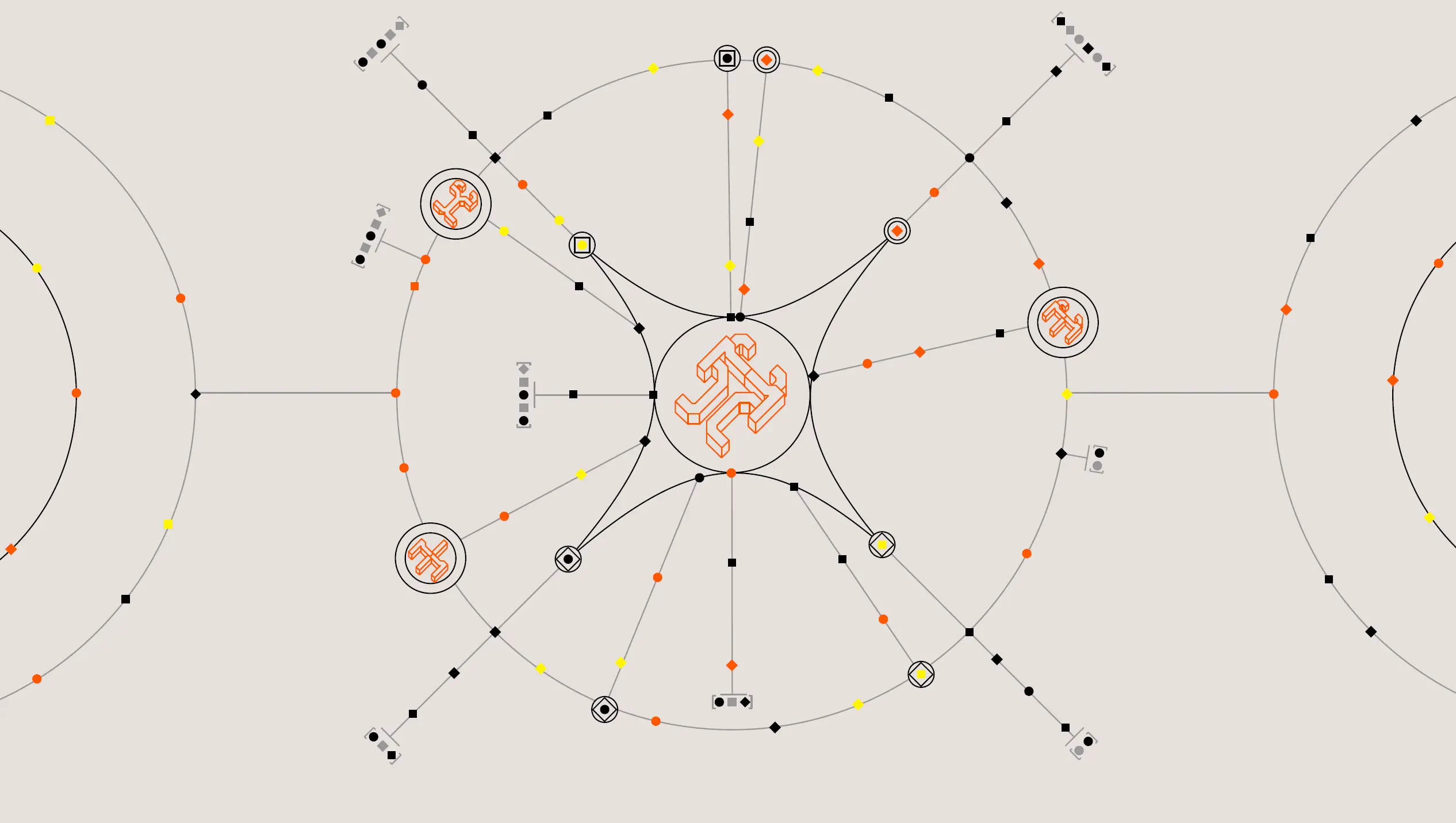
AURA core output.
Manufacturable geometry, validated alternatives, and detailed design reports.
i.Geometry
3D solid CAD geometry that satisfies the constraints specified by the engineer: physical, geometric, and manufacturing constraints. Exportable to standard formats and ready for downstream review.
ii.Alternatives
For most problems, AURA produces multiple solutions that satisfy the constraint set, each with different trade-offs. Where conventional workflows surface one or few designs, AURA surfaces several, including geometries engineers would not have drawn unaided.
iii.PDF Design report
Designs can be compared with an automatically generated report explaining how they satisfy the constraints, what trade-offs they make, and how they differ from the alternatives and their physical characteristics, providing guidance for the final decision-making.
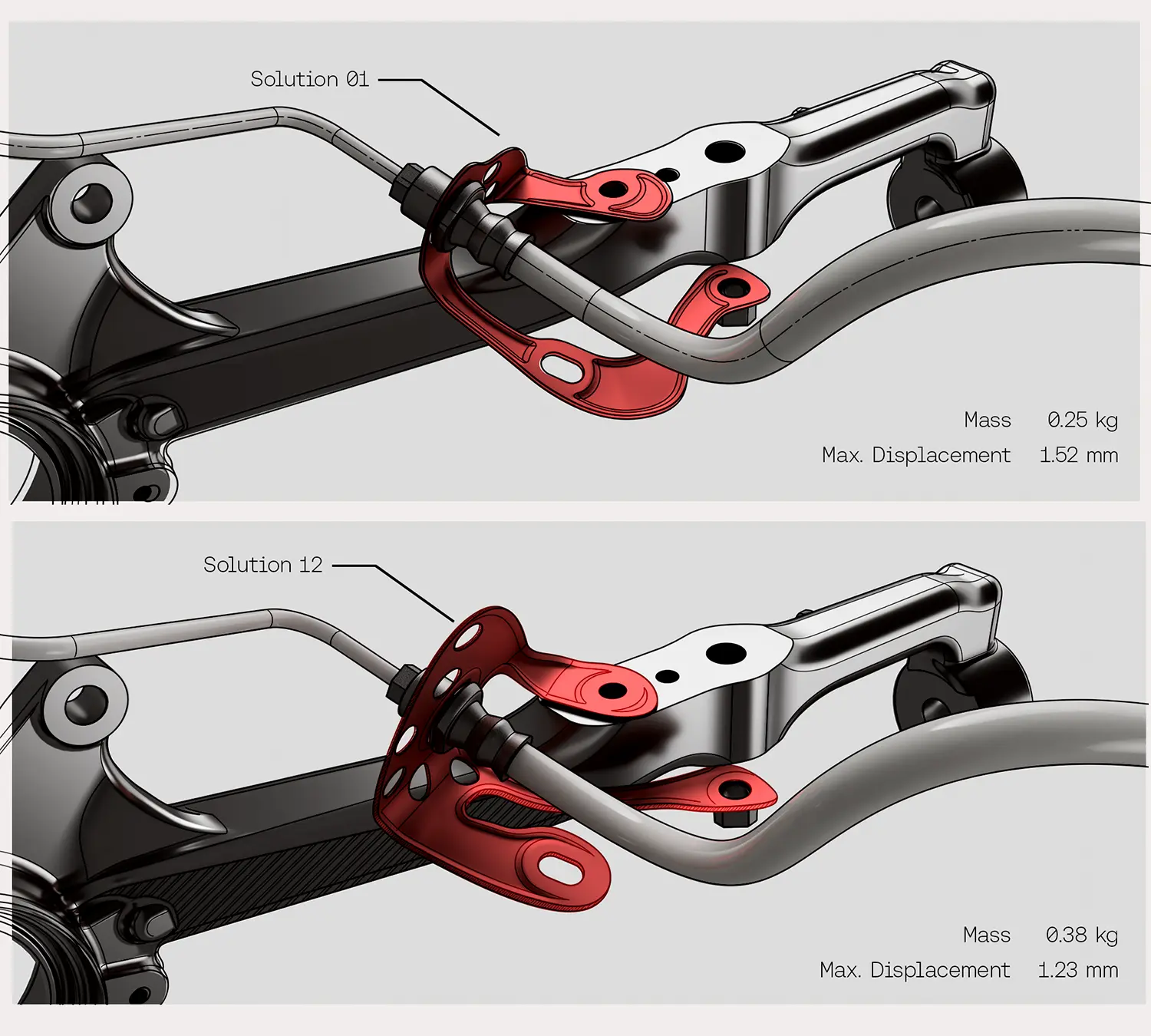
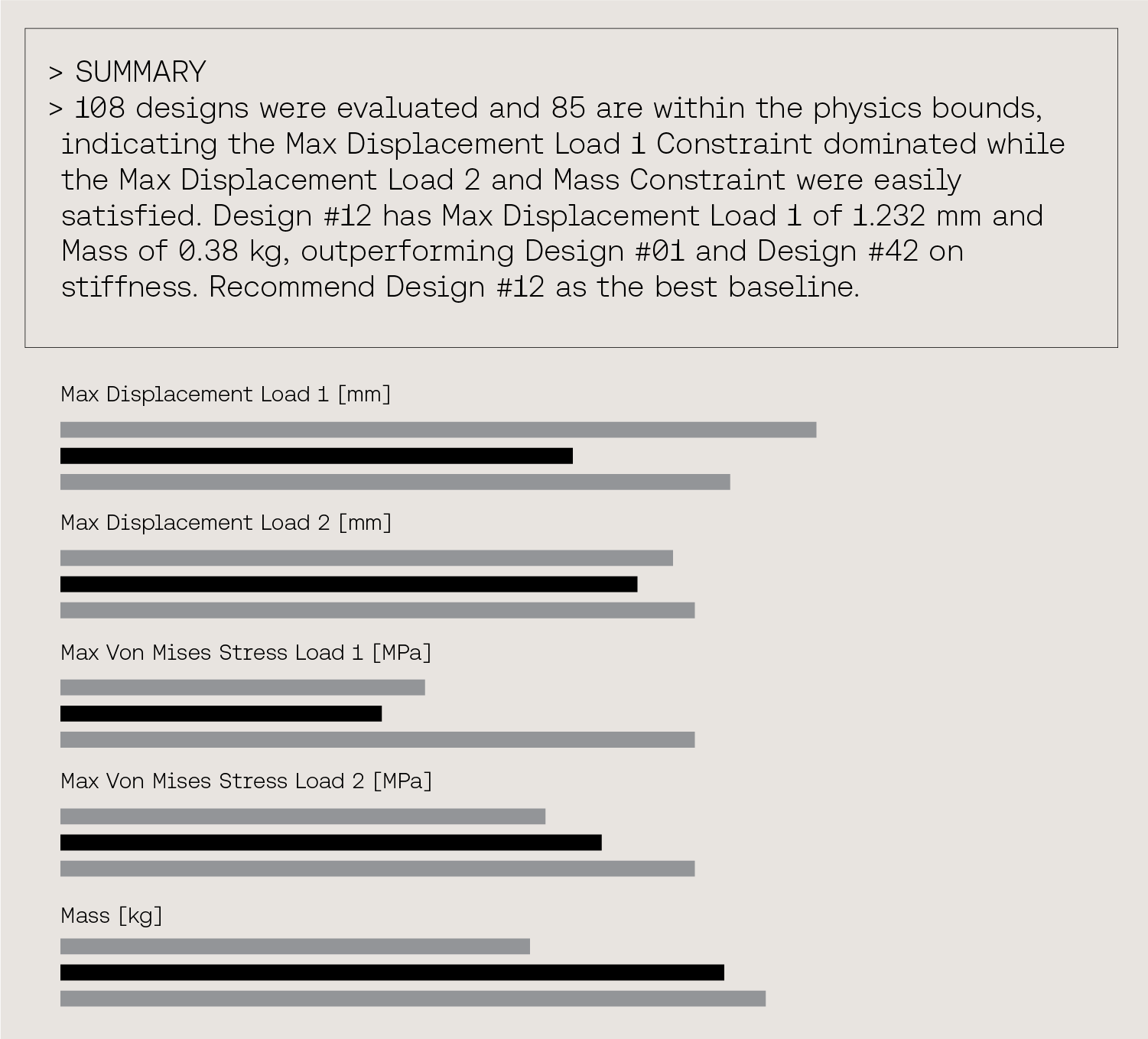
New workflow for the engineer.
AURA replaces the manual draw-and-simulate loop sitting in between the decisions made by the engineer on problem definition and selection of the final results.
Define Engineer
The engineer specifies the problem: functional goals, physical conditions, geometric envelope, manufacturing process, cost or weight targets. This specification is the contract AURA must satisfy. It is the part of the workflow where engineering judgment matters most.
Reason AURA · hours, not weeks
AURA reasons across the constraint set to produce candidate geometries. Physics, geometry, and manufacturing are not checked sequentially: they are considered together, so that a geometry produced by AURA satisfies all of them simultaneously.
Review Engineer
The engineer reviews the alternatives. Each comes with a design report explaining its rationale and trade-offs. Comparison across alternatives reveals which constraints are binding and which have slack: this informs the decision and refines the next iteration.
Decide Engineer
The engineer selects the design and integrates it into the broader engineering process: additional downstream simulation, prototyping, manufacturing handoff. AURA does not replace these stages: it replaces the slow and fragmented search that precedes them with a faster, deeper, and more exhaustive evaluation of candidates.
Principled approach to engineering design.
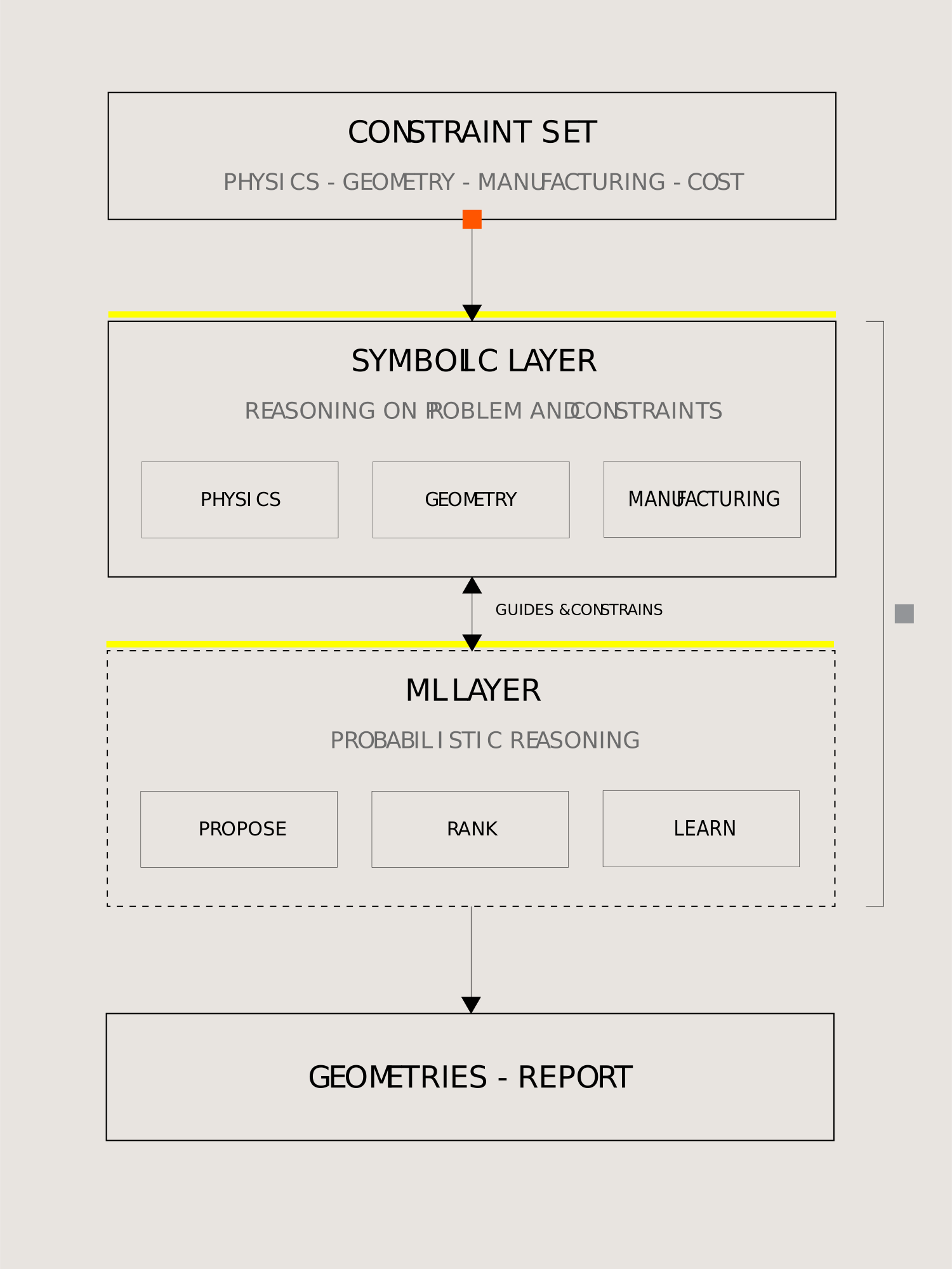
BRAID does not need a library of past designs. It works from the requirements themselves: physical conditions, available volumes, manufacturing methods, and the trade-offs between them. It then derives manufacturable shapes that satisfy these constraints.
i. A symbolic layer that encodes engineering knowledge
AURA encodes the laws of physics, the structure of geometry, the constraints of manufacturing, and the relationships between them. These are translated directly into the program that generated the geometries, so the constraint set determines what the search can express. A geometry that violates a physical law or a manufacturing limit cannot be produced.
ii. Probabilistic models that make the search practical
Reasoning across a constraint set this large, over geometry as expressive as engineering requires, is intractable purely symbolically. A ML layer guides the search: proposing directions, ranking partial solutions. It does not generate the geometries, that is the symbolic layer's job. The symbolic layer makes AURA correct, the machine learning layer makes it efficient.
iii. What this means for an engineer
AURA's output satisfies the manufacturing constraints it was given. Review shifts to whether the constraint set was right: it is the engineering judgment that the system cannot make alone, but can support the engineer to figure them out based on the relations between the constraints.
Read more in our Notebooks →